Introduction
Frozen desserts carry some of the highest margins in American foodservice. A single scoop sells for several times the cost of its ingredients, and on a hot July afternoon a line forms at any snack bar with a freezer running. For diners, drive-ins, and seaside stands from the Jersey Shore to Southern California, the question is whether to buy dessert from a distributor or make it on site. A commercial ice cream machine lets an operator produce fresh product to order, control flavor and quality, and capture the full margin that outsourced dessert gives away to a supplier.
How the Machine Works
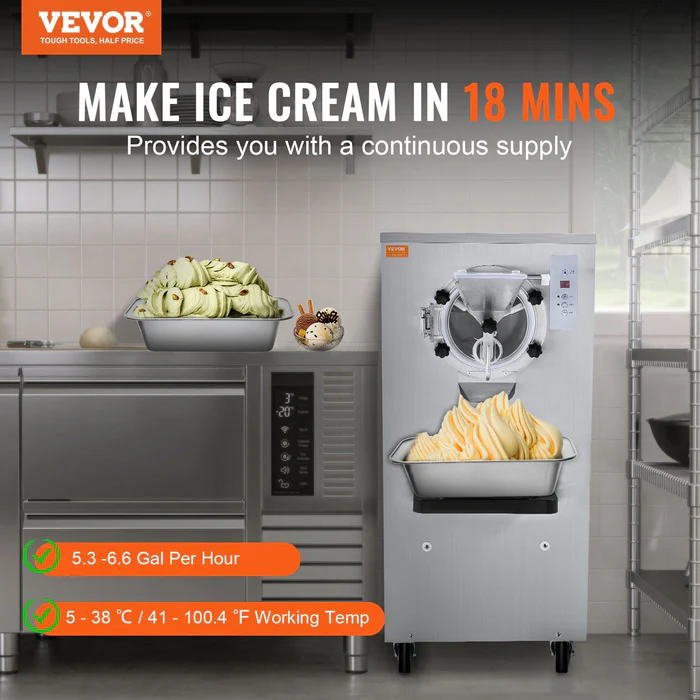
A commercial ice cream machine pumps a liquid mix into a refrigerated stainless steel cylinder, where a turning dasher scrapes the freezing wall and whips air into the mix. The result is a smooth frozen product dispensed on demand. A hard serve machine freezes the mix to a firmer, scoopable consistency for cones and dishes, while adjustable hardness settings let the operator tune texture. A digital display and an automatic clean cycle simplify daily operation for staff with little training.
Throughput and Profitability
Speed of service decides summer revenue. A machine that yields twenty to twenty-five liters per hour keeps a line moving during a rush, turning foot traffic into sales before customers walk away. An ice cream maker on the counter also lets a kitchen run seasonal flavors and limited specials that draw repeat visits, so a lakeside snack bar in Michigan can build a local reputation around a product it controls from mix to cone. Making dessert in house also frees the business from delivery schedules and supplier price swings, keeping the menu available even at the height of the summer rush.
Build and Capacity
The durability of a frozen dessert machine rests on its compressor, cylinder material, and control system. A stainless steel cylinder resists corrosion and meets sanitation standards, while a well-sized compressor recovers quickly between servings. An eight liter cylinder balances batch size against counter footprint, and a twenty-four hundred watt system delivers the cooling power to sustain output through a busy afternoon without long recovery pauses.
Performance Factors
Several conditions decide how a restaurant ice cream machine performs in service:
· Hourly yield matched to peak demand
· Compressor recovery time between servings
· Mix quality and correct overrun
· Ambient kitchen temperature and ventilation
· Cleaning routine and sanitation compliance
In a hot, unconditioned beachfront kitchen, operators give the compressor room to breathe and clear airflow, since high ambient heat slows freezing and stretches recovery time.
Food Safety Practices
Frozen dairy demands strict hygiene. Follow the automatic clean cycle on schedule, sanitize contact parts daily, and hold mix at safe temperatures before and after freezing. Keep the dispensing area clean, train staff on correct mix handling, and follow local health code for dairy equipment.
Types and Accessories
Single-flavor machines suit a focused menu, while multi-hopper and twist models add variety. Soft serve units favor high-volume cones, and batch freezers suit scoop shops making artisan flavors. Useful additions include extra mix containers, dispensing nozzles, topping rails, and a water filter that protects the machine in hard-water regions.
What Buyers Should Weigh
Choosing an ice cream machine is a question of matching output to your service. Before buying, weigh these factors:
· Hourly yield for your busiest periods
· Hard serve, soft serve, or batch format
· Cylinder size against counter space
· Electrical supply and power draw
· Cleaning features and sanitation compliance
· Warranty and parts support in the United States
Advantages and Limitations
Advantages:
· Captures the full margin on fresh dessert
· Fresh product made to order on demand
· Seasonal flavors draw repeat customers
Limitations:
· Requires daily cleaning and sanitation
· Draws significant electrical power
· Output drops in very hot kitchens
Industry Outlook
As American consumers seek fresh, locally made, and customizable food, on-site dessert production is spreading from ice cream parlors to cafes, food trucks, and full-service restaurants. Manufacturers are improving energy efficiency, automatic cleaning, and compact countertop designs. The growing range of commercial ice cream and frozen dessert machines reflects that trend, and in-house freezing will keep expanding as operators chase both the margin and the quality control that fresh dessert delivers.