
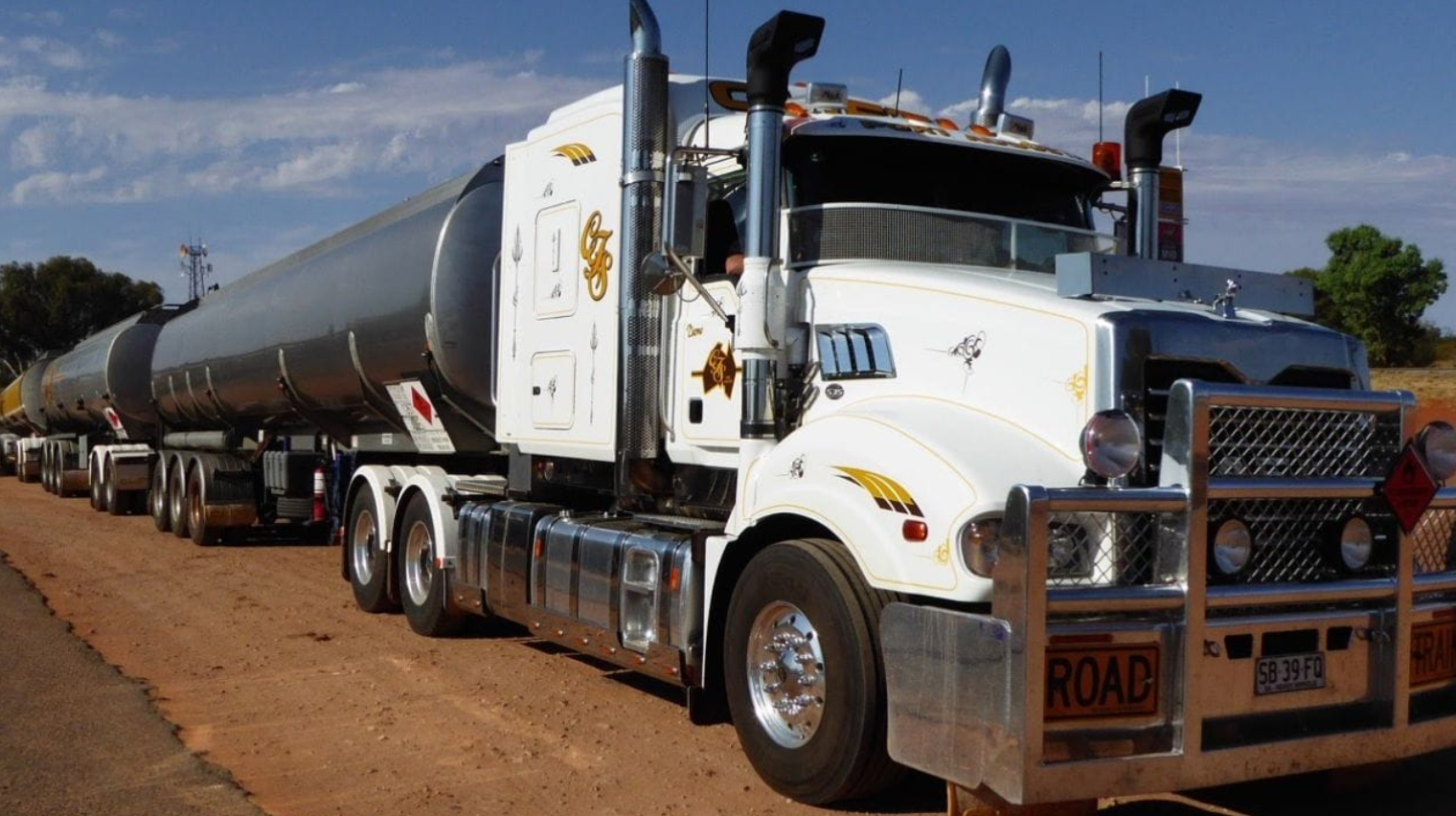
A road train truck is basically a prime mover pulling multiple trailers in a single configuration, creating what looks like a freight train on wheels. These massive vehicle combinations can stretch up to 53.5 meters in Australia and carry payloads exceeding 200 tonnes, making them one of the most efficient land transport solutions for remote areas. Originally developed in Australia during the 1930s to move livestock across the Outback, road trains now transport everything from fuel and minerals to general freight across regions where rail infrastructure doesn’t exist or isn’t economically viable. Their ability to move large volumes in a single trip significantly reduces per-unit transport costs compared to standard truck configurations.
While road train trucks handle large-scale freight across vast regions, smaller logistics solutions such as Kent Car Delivery Service also play an important role in transporting individual vehicles safely between locations.
The engineering behind multi-trailer configurations
Road trains work because of carefully engineered coupling systems that distribute weight across multiple axles. Each trailer connects through a turntable mechanism or drawbar setup that allows the entire configuration to navigate curves and uneven terrain. The physics gets interesting when you think about it. A standard B-double has 19 axles, but a road train can have 30 or more, spreading the massive weight load so individual road sections don’t get destroyed.
Australian regulations specify that each axle can only carry about 6 tonnes on single-axle groups, which is why these trucks need so many wheels. The suspension systems use a combination of air bags and mechanical springs that adjust dynamically based on load distribution. I’ve read studies showing that modern road trains actually cause less road wear per tonne-kilometer than shorter, heavier trucks because the weight gets spread out so effectively.
Where road trains operate and why they matter
You’ll mainly find road trains in Australia, parts of the United States, Canada, and Argentina. Australia has the most extensive network, with dedicated road train routes covering over 100,000 kilometers. The Northern Territory allows triple road trains (three trailers) on many highways, while Western Australia and Queensland have specific corridors for these vehicles.
The economic impact is huge. A single road train can replace four or five standard semi-trailers, which means fewer drivers needed, less fuel consumed per tonne, and reduced emissions overall. Research from the National Transport Commission shows that road trains reduce transport costs by about 30 to 40 percent on long haul routes compared to conventional trucks. For mining operations in remote areas, this efficiency translates to millions in savings annually.
Safety systems and driver requirements
Operating a road train isn’t something you just jump into. Drivers need special endorsements and extensive training because the handling characteristics are completely different from regular trucks. The braking distance for a fully loaded road train can exceed 300 meters at highway speeds, so anticipation becomes critical.
Modern road trains use electronic stability control systems that monitor each trailer’s movement independently. If one trailer starts to swing out during a turn, the system can apply brakes to specific axles to bring everything back in line. Some newer models include roll stability systems that detect when the center of gravity shifts too far during cornering.
The cabs themselves feature advanced monitoring systems that track tire pressure, brake temperature, and coupling integrity in real time. Satellite communication lets operators monitor exact locations and performance metrics, which helps with route optimization and maintenance scheduling. It’s pretty sophisticated stuff when you consider these trucks might be hundreds of kilometers from the nearest town.