
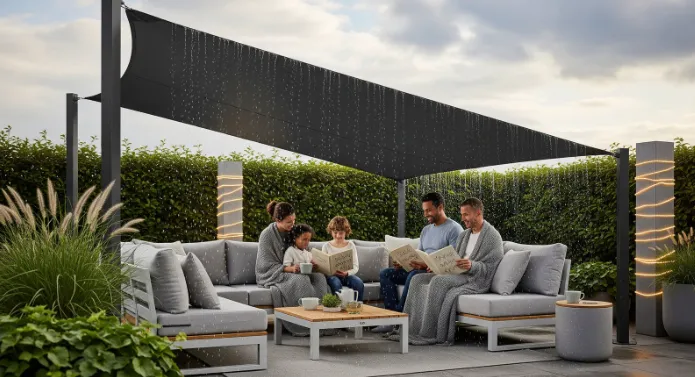
Yes-waterproof sun shade canopies are usually well worth the cost if you want to use your outdoor area more often, no matter the weather. Standard mesh sails only block the sun, but a good-quality sun shade canopy works like an all-weather cover, blocking up to 98% of harmful UV rays and keeping the space underneath dry during rain. For homeowners who like to host even when there’s a light shower, or for cafes and other businesses that need to keep outdoor seating open in wet weather, these canopies give a level of flexibility that basic shade options can’t match.
However, the benefits of a sun shade canopy depend a lot on your local climate and how well it is installed. They offer stronger protection, but they also need more accurate tensioning and a steeper angle than porous sails so rain does not collect on top. When you choose the right model and install it properly, it can turn patios, decks, and playgrounds into useful outdoor areas for most of the year, often acting as a lower-cost option instead of fixed roofs or pricey retractable awnings.
What Are Waterproof Sun Shade Canopies?
How Do Waterproof Canopies Differ from Other Shade Solutions?
At first glance, a waterproof canopy can look similar to a normal shade sail, but the difference lies in how it is made. Standard sails are usually made from knitted High-Density Polyethylene (HDPE), which lets air and some water pass through. Waterproof models use special coated or laminated fabric that creates a rainproof barrier. This barrier stops rain from getting through the fabric so anything underneath-like outdoor furniture or a dinner setting-stays dry.
These canopies are tensioned fabric structures that focus on blocking rain as well as sun. Because the fabric does not let water through, it doesn’t just slow the weather down; it redirects it off the surface. This makes them much more effective than typical umbrellas, which have limited coverage, or mesh sails, which can let a fine mist pass during steady rain. They sit between temporary shade and permanent roofing, offering a clean, modern look that can improve the style of your outdoor space.

Popular Materials Used in Waterproof Canopies
The most common materials for these high-performance sails are polyester (PES) and HDPE that has been coated with polyurethane (PU) or laminated with special layers. PU-coated PES fabric gives a good mix of light weight and strong waterproof performance. These fabrics are often treated with anti-mold coatings so that moisture does not damage them over time.
Other high-end choices include PVC-coated fabrics, which are fully waterproof and very tough. PVC is heavier-usually from 400 gsm up to 1500 gsm-but it is often used in commercial spaces where long-term strength is needed. Some newer products also use Olefin, which dries quickly and is more eco-friendly, but it usually has lower UV resistance than PU-coated polyester. Picking the right material is the first step to make sure your canopy can handle your local weather, whether that means salty sea air or strong sun and heat.

Are Waterproof Sun Shade Canopies Truly Waterproof or Just Water-Resistant?
Waterproof vs. Water-Resistant: What’s the Difference?
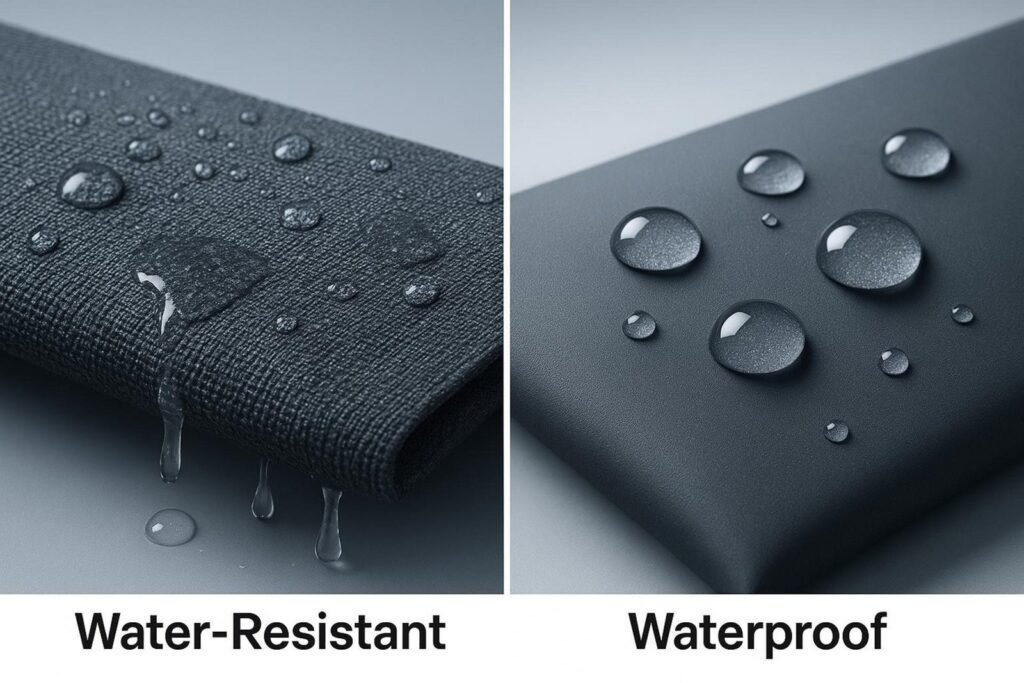
People often mix up “water-resistant” and “waterproof,” but they describe very different levels of protection. A water-resistant canopy can push light rain away so drops roll off, but if there is heavy or long-lasting rain, water will eventually force its way through the fabric, leading to drips. Most standard HDPE shade sails are in this water-resistant group.
A truly waterproof canopy is made from fabric that does not let water pass through at all, no matter how hard it rains. These sails act more like a temporary roof. To reach this level, the seams also need special work-good models have heat-sealed seams or adhesive tape over stitch lines so water cannot leak through needle holes. This gives a completely dry space underneath.
Testing and Ratings for Waterproof Shade Fabrics
To prove a canopy can handle bad weather, manufacturers put the fabrics through strict tests. One common test is the hydrostatic pressure test. PU-coated fabrics are often rated to withstand water pressure up to about 400 kPa. This means that even in a heavy storm, the force of the falling rain will not push water through the fabric, as is the case with high-quality solutions like those offered by https://shade4you.eu/. These fabrics are also checked for UV protection, and many block 90% to 98% of UV rays, giving them a UPF 50+ rating.
Longevity is checked with accelerated weathering tests. Well-known brands often use 2,000-hour UV tests to show that the fabric won’t go brittle or fade badly after one season. When buying, look for clear test figures and ratings—rather than just the word “waterproof”—to help you tell the difference between a short-term budget option and a canopy that can last ten years or more.
Benefits of Choosing Waterproof Sun Shade Canopies
All-Weather Protection for Your Outdoor Spaces
The main attraction of a waterproof canopy is that it works in both sun and rain. It gives a cool, shaded place in the height of summer and a dry cover during surprise showers. This added protection can stretch out the time you spend outside each year. Instead of rushing indoors when it starts to drizzle, you can carry on cooking, eating, or relaxing. For cafes and restaurants, this means outdoor seating can still bring in money even when the weather is mixed.

Increased Durability and Longevity
Because waterproof canopies are often made with heavier fabrics like 260 GSM polyester or PVC, they are usually stronger than standard mesh sails. These materials are less likely to tear and, when tensioned correctly, can handle wind gusts up to about 60 mph. A good waterproof sail that is looked after well can last around 10-15 years, which is much longer than a typical patio umbrella that can fail easily in strong winds.
UV Block and Sun Protection Capabilities
These canopies don’t just stop rain; they are also very effective at blocking the sun. With dense fabrics and special coatings, they can reduce the temperature underneath by around 10-15°F (5-8°C). Many block up to 98% of UV rays. This level of protection helps protect your skin and also helps shield your furniture, decking, and other outdoor items from fading, cracking, and other sun damage.
Potential Drawbacks and Limitations of Waterproof Sun Shade Canopies
Risk of Water Pooling and Structural Stress
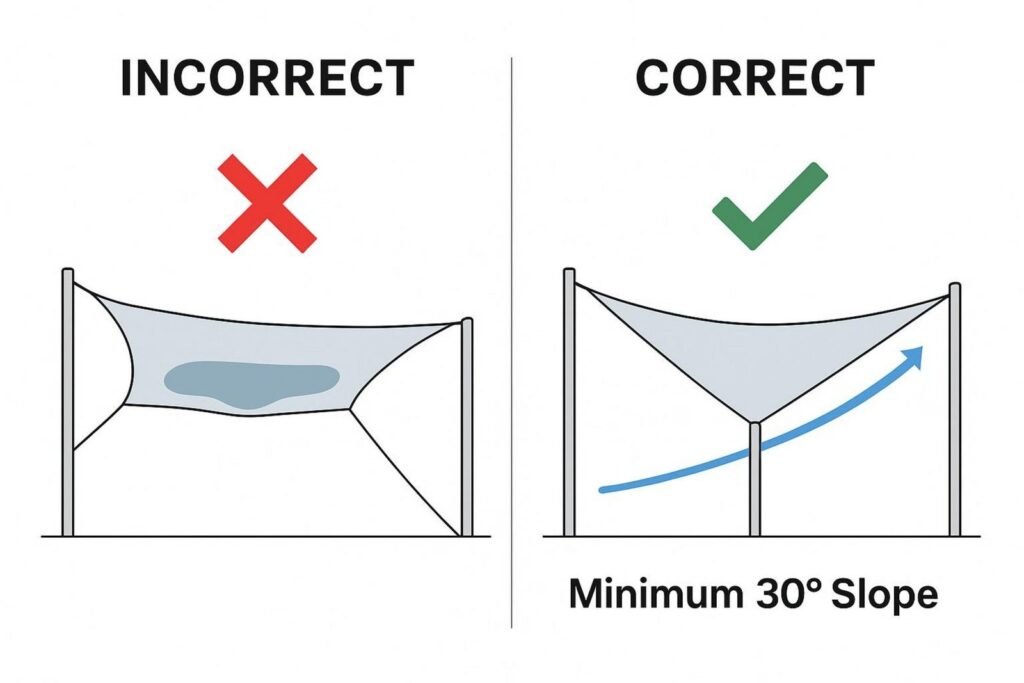
The same waterproof quality that keeps you dry can cause problems if the sail is installed the wrong way. If you install a waterproof canopy flat or with too little slope, rainwater will collect in the middle. This can create a deep pool that may weigh hundreds of pounds, placing huge stress on the fabric, stitching, and anchor points. This can lead to rips, pulled anchors, or a permanently sagging sail. To avoid this, the canopy must be fitted with a steep angle, which some people may not like visually.
Reduced Airflow and Heat Build-Up
Permeable HDPE sails allow air and some hot air escape through tiny gaps in the fabric. Waterproof fabrics are solid, so they can trap warm air below, especially if mounted low. This can lead to a stuffy feeling under the sail. While high-quality PES can breathe a little better than PVC, it still doesn’t match the airflow of a mesh sail. To reduce heat build-up, you need to install the canopy higher and at an angle that encourages air to move through the space.
Wind Vulnerability and Storm Considerations
A waterproof canopy catches the wind like a large sail or parachute. Because air cannot pass through, every gust puts a lot of force on the posts and wall brackets. In windy regions or areas with sudden storms, the sail must be fixed to heavy steel posts or strong, load-bearing wall studs. In extreme weather, such as hurricanes or heavy snow, you should take the sail down to avoid damage to both the canopy and the building.
Maintenance Needs: Cleaning and Upkeep
Waterproof coatings need regular care to stay effective. Dirt, bird droppings, and pollution can build up on the smooth surface and may block the coating or cause mold if left too long. Cleaning is usually simple-a rinse with mild soap and water is often enough-but it needs to be done on a regular schedule. Also, the fabric can stretch slightly over time, so you should check the tension every 3-6 months to avoid sagging and reduce the chance of water pooling.
How Do Waterproof Sun Shade Canopies Compare to Other Shade Solutions?
Comparison with Permeable Shade Sails
Your climate is often the deciding factor between a permeable and a waterproof sail. Permeable sails work very well in hot, dry areas; they allow plenty of airflow and usually need less adjustment, as rain drains through and does not pool. However, they only block about 60-70% of rain. Waterproof sails are better all-round solutions. They usually cost 30-40% more and are trickier to install because of the slope and tension needed, but they offer far better protection during rain.
Canopies vs. Awnings: Pros and Cons
Retractable awnings are a popular option above doors and windows, but they can be expensive and have moving parts that may fail over time. Waterproof shade sails can provide similar coverage at around 30-50% lower cost. They also offer more creative design options; for example, you can overlap several sails in different shapes and heights. On the other hand, awnings can be pulled back easily, often by motor, while most shade sails are fixed and must be removed by hand if you want them out of the way.
Shade Canopies vs. Patio Umbrellas
Patio umbrellas are easy to move and store, but they don’t cover large areas well and they are often unstable. A single sun shade canopy can cover both a dining table and a lounge area, while you might need several umbrellas to do the same job. Umbrellas are also known for tipping over even in light winds. A properly tensioned canopy, fixed to strong posts or walls, feels far more solid and creates a more permanent “outdoor room” effect.
Key Factors Before Buying a Waterproof Sun Shade Canopy
Quality Indicators: Brand Reputation and Fabric Specs
When you buy a canopy, the fabric weight, listed as GSM (grams per square meter), is an important guide. For a waterproof sail, aim for 220-260 GSM. Lighter fabrics may stretch, sag, or wear out faster. Brand history matters too-good makers offer 3-5 year warranties and clear UV protection ratings. Be cautious of very cheap, unknown brands that use thin polyethylene; these can tear easily and may lose their waterproof coating after one season in strong sun.
Selecting the Right Size, Shape, and Design
Ready-made sails often don’t match your space exactly. Many homeowners choose custom-sized sails to get a better fit. When measuring, reduce the distance between anchor points by about 10% to allow space for turnbuckles and other tension hardware. For shape, “twisted” or hyperbolic designs (with two corners high and two low) look striking and are also very good at shedding water and resisting flapping in the wind.

Safe Installation and Anchoring
Safety matters a lot with shade sails. The fabric pulls strongly on its anchor points. Attach sails only to solid walls, heavy-duty studs, or steel posts at least 4 inches in diameter, set deep in concrete. If you use a tree, it should be healthy and at least 10 inches in diameter. Use high-quality stainless-steel D-rings and fittings to avoid rust and to keep the sail tight over time.
Regional Climate: Is Waterproof Necessary in Your Area?
Before buying, think about your local weather. If you live in a dry place like much of Arizona, a breathable permeable sail may be a better option because it keeps things cooler while still giving shade. But if you live somewhere with frequent showers or high humidity, a waterproof canopy can be extremely useful, as it lets you keep using your outdoor space even during rainy months.
Installation and Maintenance Tips for Waterproof Shade Canopies
Professional vs. DIY Installation: What to Know
Smaller, simple sails (like triangles) are often suitable for a DIY weekend project. Larger rectangular sails or multi-sail setups are usually better handled by a professional installer. Experienced installers have the right tools to set posts straight, get the correct angles, and pull the fabric tight. If a sail is left loose, it will flap in the wind, shortening fabric life and possibly damaging your walls or posts.
Preventing Water Pooling and Material Stress
The key rule for waterproof canopy installation is to create enough slope. The sail should be installed at an angle of at least 30-40 degrees. A common method is to mount one corner 5-6 feet lower than the highest corner. This creates a clear path for water to run off. Without proper slope, even very strong fabric can fail because of the weight of standing water. For very large sails, you can also add a central “water guide channel” or use multiple sails at different heights to move water away.
Routine Cleaning and Inspection for Longevity
To keep your canopy in good shape, rinse it once a month to remove dust and dirt. Avoid pressure washers; the strong spray can strip off PU or other coatings. Use a garden hose and a soft brush with mild soap instead. Twice a year, check all the hardware: tighten turnbuckles, inspect D-rings and attachment points for wear or rust. In snowy regions, take the sail down for winter and store it dry so heavy snow cannot build up and damage the structure.
Are Waterproof Sun Shade Canopies Worth It?
Factors That Make Waterproof Canopies a Smart Investment
For many people, the value comes from getting more use out of their home. A waterproof canopy can feel like adding an extra outdoor room at a much lower cost than a solid extension. It protects outdoor kitchens, TVs, seating, and other items from rain and intense sun, which can save a lot on replacements over time. For restaurants, bars, and cafes, being able to keep outdoor seating open during showers can bring in extra income that may cover the cost of the canopy quickly.
When Might a Standard Shade Solution Be Better?
If you only want to block harsh sun over a pool or garden in a place with very little rain, a standard permeable sail is often the better choice. It’s cheaper, simpler to mount because it does not need a steep slope, and it usually feels cooler underneath due to better airflow. If you live in a very windy location where strong gusts are common, a permeable sail that lets some wind through can also be safer and more practical than a solid waterproof canopy.
Frequently Asked Questions about Waterproof Sun Shade Canopies
Do Waterproof Canopies Block All UV Rays?
No fabric blocks every single UV ray, but good waterproof canopies block around 95-98% of UVA and UVB. This is similar to using a high-SPF sunscreen. Remember that UV can still reflect from nearby surfaces such as walls, glass, or concrete, so while the canopy greatly reduces direct exposure, it does not create a completely UV-free area.
How Long Do Waterproof Canopies Last?
If you look after them, high-quality 260 GSM polyester or PVC sails typically last 10-15 years. Cheaper polyester versions may last only 2-3 years before coatings peel or fabric starts to fray. How long your canopy lasts depends a lot on how well it is tensioned (less flapping means less wear) and how clean you keep it.
What Should I Watch For During and After Heavy Rain?
During heavy rain, check that water is running off the sail and not forming a big bulge in the middle. After the rain stops, walk around the canopy and look for branches or other heavy debris that may have fallen on it. If you see any sagging or looseness after a storm, tighten the turnbuckles or adjustment hardware slightly to bring the sail back to a tight, even surface.
To sum up, waterproof sun shade canopies need a bit more planning than an umbrella or a simple mesh sail, but they offer a strong, stylish, and long-lasting way to control sun and rain in your outdoor area. They work as more than just covers; many designers describe a well-tensioned sail as “functional art” that can turn a standard backyard into a space you can enjoy much more of the year. Whether you want a simple shape that blends with your home or a custom-printed sail that stands out, staying dry, shaded, and protected over many seasons makes these canopies a smart choice for many modern homes.