
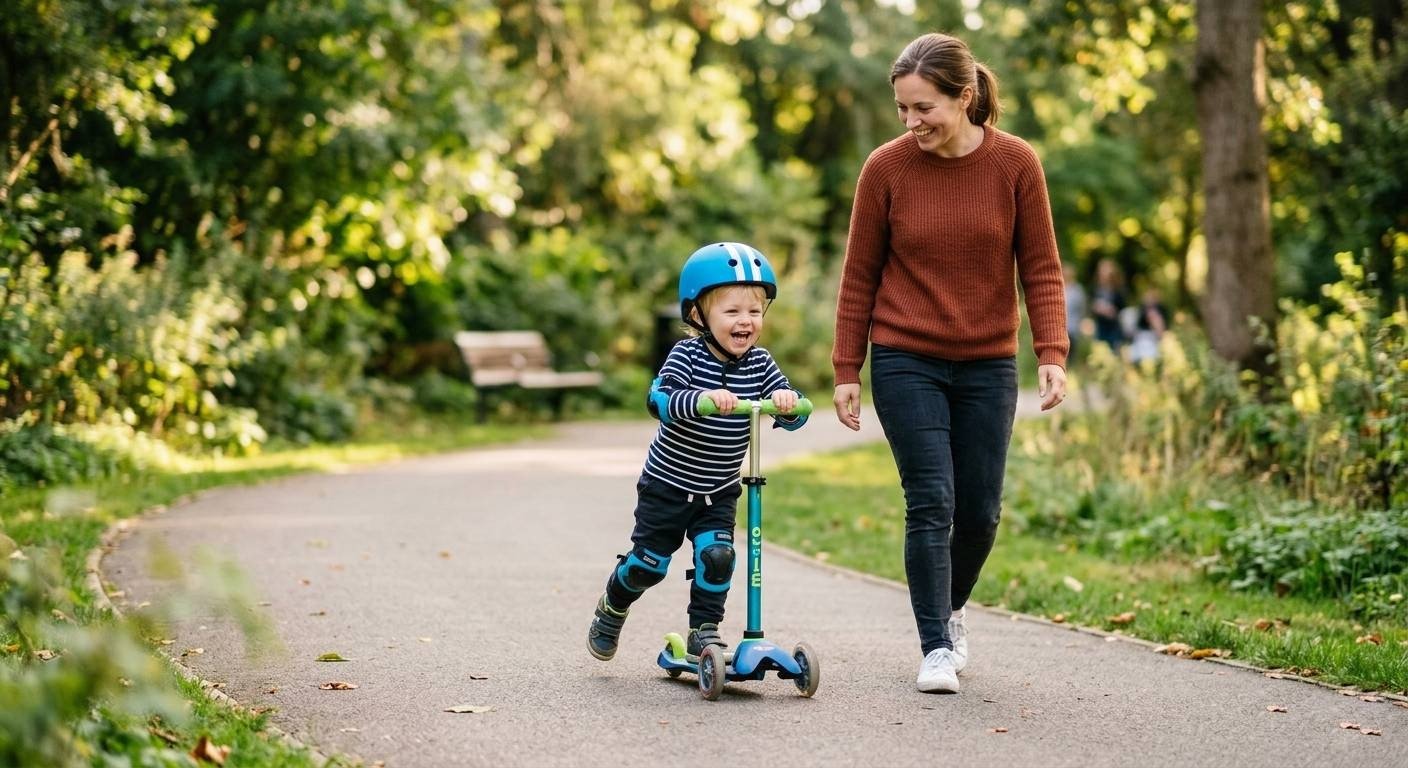
Scooting means more than simple outdoor play. It helps kids steady their balance, strengthen their legs, and build real confidence. Yet many parents wonder the same thing: when should they begin?
It all comes down to your child’s age, their coordination, and how comfortable they feel. This guide explains the right ages for scooting, from the little ones to the older kids.
Why Age Matters for Scooting
Kids pick up skills at their own pace. A scooter that suits a 2-year-old won’t suit a 7-year-old. Picking the right scooter for their age keeps your child safe and lets the fun last. The right scooter also stops frustration from creeping in. A scooter that doesn’t fit well can make a child quit in a hurry. But one that suits them perfectly has them asking to ride every single day.
For the youngest riders, look at globber scooter for kids. These come made with safety and how kids grow in mind. They have features like wide decks, steady wheels, and simple steering locks for those just starting.
The Best Age Range for Scooting
Most children can start scooting between ages 2 and 3. By age 2, many toddlers have enough leg strength and coordination to stand on a scooter and push forward. Still, never start too soon. A child who cannot walk steadily is not ready to scoot.
Here is a quick breakdown by age group.
| Age Group | Readiness Level | Recommended Scooter Type |
| 12 to 18 months | Not ready yet | None. Stick to building walking skills. |
| 2 to 3 years | Ready to begin | 3 wheel scooters with steering lock |
| 3 to 5 years | Steady and sure | 3 wheel scooters with adjustable height |
| 5 to 7 years | Ready to move on | 2-wheel scooters with rear brake |
| 7 years and up | Riding on their own | Standard 2-wheel scooters |
Toddlers (Ages 2 to 3): First Steps on Wheels
For kids this young, buy scooters online built for solid stability. Go for one with three wheels. Two wheels in the front and one in the back give the best steadiness. Also, look for a steering lock. This keeps the handlebars from swinging too far. It helps your child ride in a straight line while they learn.
A globber scooter for kids in the toddler range often includes these safety features. The wide deck leaves plenty of room for small feet to stand easy. The low deck height makes it simple to step on and off.
Signs your toddler is ready:
- They can walk and run without tripping much.
- They can stand on one foot for a couple of seconds.
- They seem keen on riding toys.
Preschoolers (Ages 3 to 5): Building Confidence
By age 3 or 4, many children have steadier balance. They can steer past small objects and stop with their foot. At this point you can take off the steering lock if your scooter has one. Your child can now make turns and ride down gentle slopes.
This is also a good time to introduce a balance bike for toddlers. A balance bike teaches the same leaning and steering skills as a scooter. Going back and forth between a balance bike and a scooter improves their overall coordination. Many families keep both. The balance bike works on bigger balance moves. The scooter works on pushing and gliding.
Skills to expect at this age:
- Gliding in straight lines at a good pace
- Turning left and right smoothly without toppling
- Coming to a stop by planting a foot
- Spotting little bumps or things in the way
Big Kids (Ages 5 to 7): Moving to Two Wheels
A two-wheeled scooter might be right for your youngster at age 5 or 6. Two-wheeled scooters are a little quicker and need somewhat better equilibrium. The process should always start with making sure your child can ride a bike without training wheels. It often means they’re ready for two wheels on a scooter.
Measure the height when switching scooters. Your kid has to be able to grip the handlebars with a little bend in his or her elbows. Their weight-bearing foot has to stay flat on the deck.
Safety Tips for Every Age
Safety makes sure scooting stays enjoyable. Stick to these rules no matter the age.
- Always put on a helmet. No exceptions here. Beginners should also use knee pads and elbow pads.
- Inspect the scooter every time before riding. Watch for any loose screws or wheels that look worn.
- Stick to flat and smooth ground. Driveways, sidewalks, and parks work great. Stay away from gravel or sharp downhill spots.
- Keep an eye on little ones. Never let a child under 5 ride without you nearby.
- Swap out any worn parts. Old wheels or brakes could lead to spills.
Other Great Ride-On Toys for Young Kids
Scooters aren’t the only way to play actively — kids can also do so without wheels. Many families start out with ride-on toys before moving on to scooters. Globber ride on toys are a stable, seated option for children from 12 months. They have four wheels and a low seat. Your child sits and propels with her feet. It develops leg strength and requires no balancing whatsoever.
A ride-on toy is the perfect first step. When your little one is 2, they can transition easily from a ride-on toy to a three-wheeled scooter. The abilities carry over easily. They both have the same push and steer controls.
Final Takeaway
Most children between two and three years old are prepared to start scooting. Beginning them off with a strong three-wheel scooter with steering lock is the best course of action. Always start with safety gear. Change to a two-wheeler or modify the scooter height as kids mature. Watch for irritation and anxiety as they can interfere with the kids’ enjoyment. Scooting ought to feel like fun, not a boring chore.
Start with a ride-on toy for a youngster under two. Before moving to two wheels, first attempt on a balance bike if they are above 5. Whatever the age, the right scooter is one that matches your child’s present needs rather than something they would become later in life. Make it easy, make it safe, and have pleasure seeing them rolling around the backyard.